Risk-based prioritization for high-hazard industries

Can you see what matters most?

Insight Risk Systems turns the data you already hold into transparent, defensible risk decisions. Our patented analytics were built on hundreds of thousands of incident records from mining, power generation and construction, and our methods are published in peer-reviewed journals.

100,000s

incident records analyzed across mining, power and construction

100+ / 300+

mining operators and contractors, and subject matter experts, engaged in bowtie work

Patented

GapFinder analytics for human and organizational factors

On-site

Your data stays in your environment. No cloud uploads.

Led by Dr. Lianne Lefsrud, P.Eng., Risk, Innovation, and Sustainability Chair (RISC), University of Alberta. Recent work includes de-risking the hydrogen value chain in Canada, automated train inspection and enhanced train control systems.
Prefer the short version?

Turning your existing data into smarter risk decisions

Insight Risk Systems uses patented algorithms to analyze the data you already have, from policies and standard operating procedures to incident reports, surveys, inspections and interview transcripts. The result: insights you can act on.

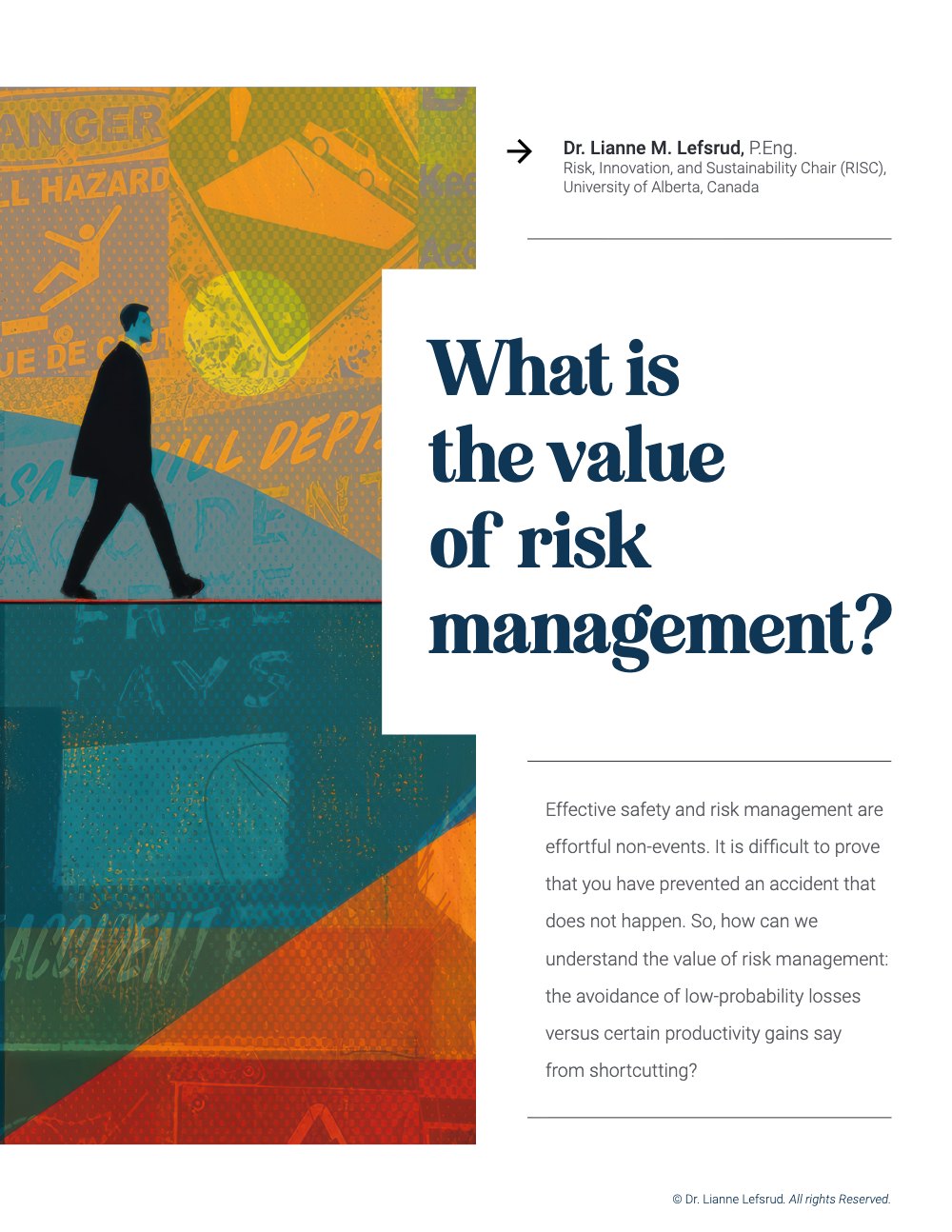
What is the value of risk management?

Risk management is more than damage control. It maps a route through uncertainty, untangles cause and effect, and brings clarity to ambiguity, so leaders can act decisively.

Where does fear flourish in organizations?

When people are busier managing impressions than identifying hazards, your risk system has a blind spot. Be skeptical of green-only dashboards, stony silences and suspiciously good news. They may not signal a safe operation. They may signal a fearful one.

What do our partners say?

I mentioned to Lianne that I had some challenges in guiding diverse stakeholders to make fair decisions related to risks and setting up risk tolerability in regulations. In a few weeks, she e-mailed me with a list of high-quality papers on risk perspectives and social implications on risk tolerability, which guided me to look at risks from lenses beyond traditional safety engineering… Her co-authored paper ‘Framework for Developing Risk to Life Evacuation Criteria Associated with Landslides in Canada’ became one of the key references in AER’s Manual 017 that provides guidance on risk-based evaluation criteria for coal mine pit wall abandonment.

This collaborative project with CPKC, the NRC, and U of A is an excellent example of how large entities can work together to evaluate technology that can be integrated into future operations industry-wide. The technology improves innovation, efficiency, productivity, and the reliability and resilience of our transportation system as a whole. All factors that can positively impact the Canadian economy.

Hydrogen energy, as a key component of clean energy, has become a focal point of current societal and industrial concerns regarding transportation safety. The topic of this paper closely addresses a core issue in this field, offering significant academic value and practical implications, and provides an important research reference for the future safety of hydrogen transportation.

Thank you again for organizing these two workshops. You truly answered my prayers after (our son) died and as we went through everything. I had so many questions and I felt that there were so many holes and grey areas in all that happened after. All I could think was; I wish we could some how change or better the systems that were in place to help other people/families after a work place fatality.

Where do we start?

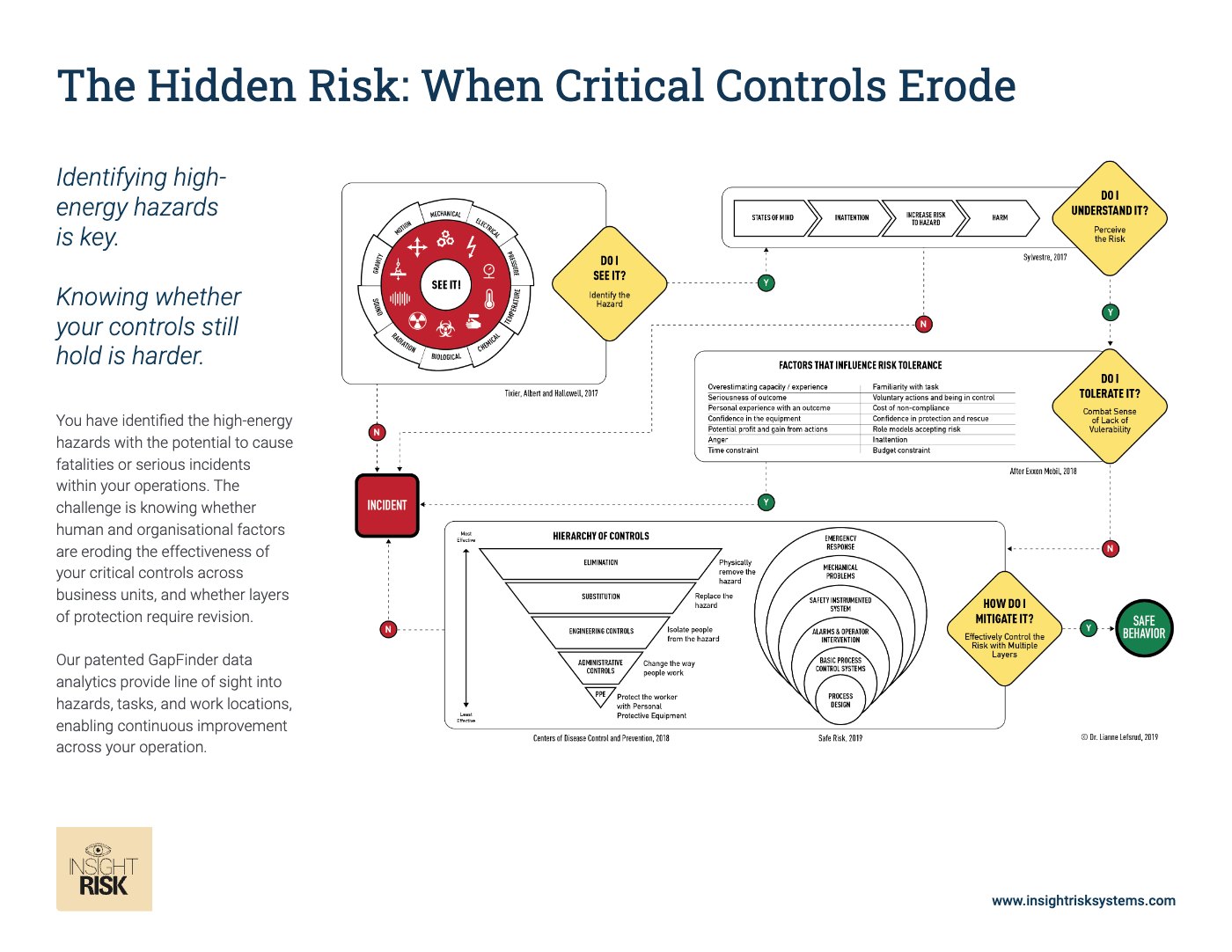
With a conversation, not a sales pitch. Think of Insight Risk Systems as a thinking partner. Every engagement comes back to three questions about each hazard:

ONE

Do I see it?

Is the hazard visible in your incidents, inspections, critical controls assurance and work planning?

TWO

Do I understand and tolerate it?

What human and organizational factors make weak controls or risky exposure seem acceptable?

THREE

How do I prevent or mitigate it?

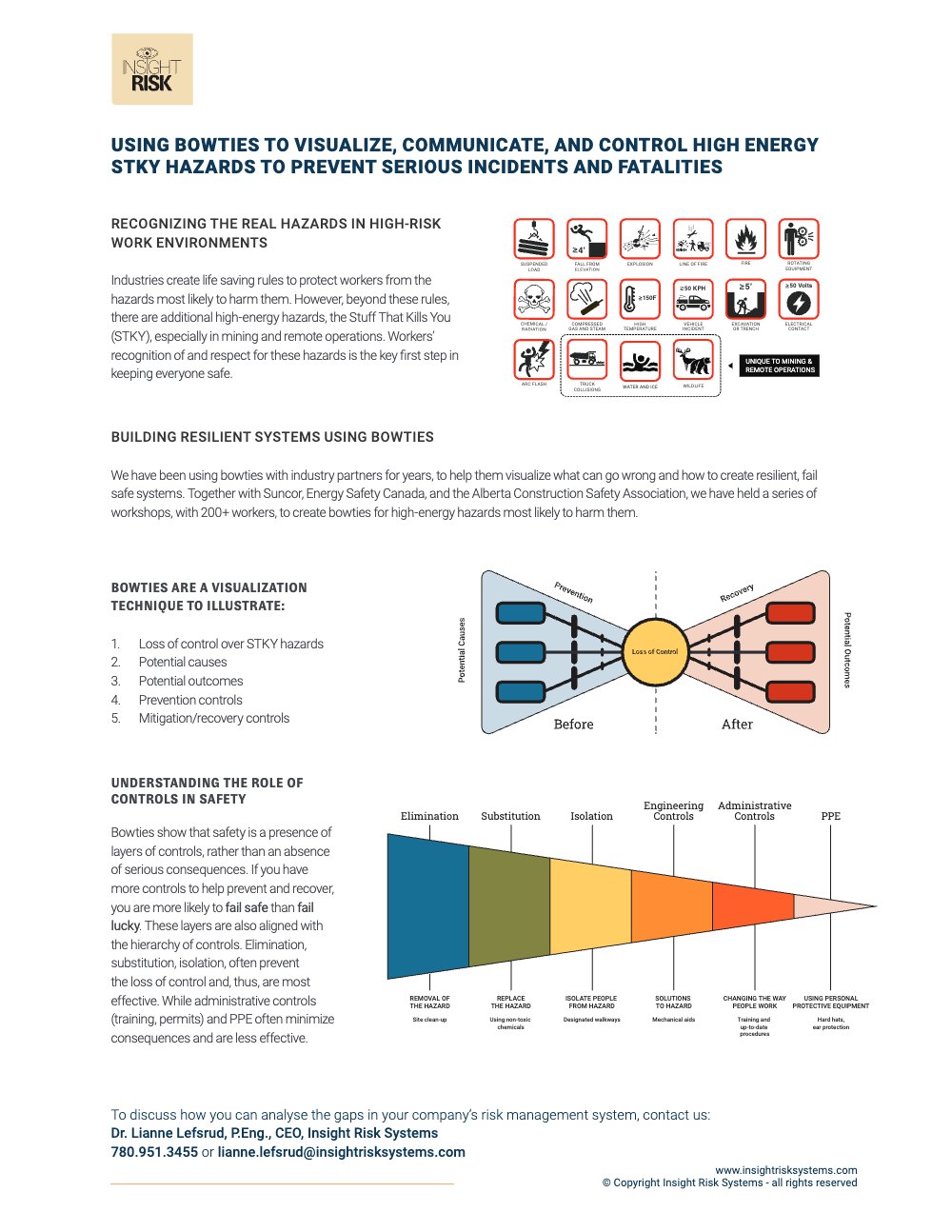
Which layers of control actually carry the load?

Three ways to work with us

Visualize & Prioritize

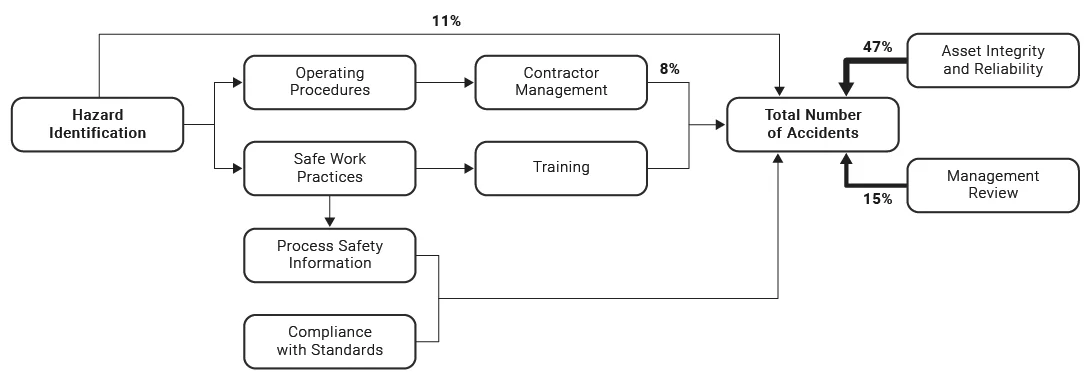
For organizations with plenty of data but little clarity, i.e., serious incident and fatality (SIF) precursor identification, systems-level gap analysis, and dashboards that show executives and supervisors the top risks and leading indicators.

Integrate & Implement

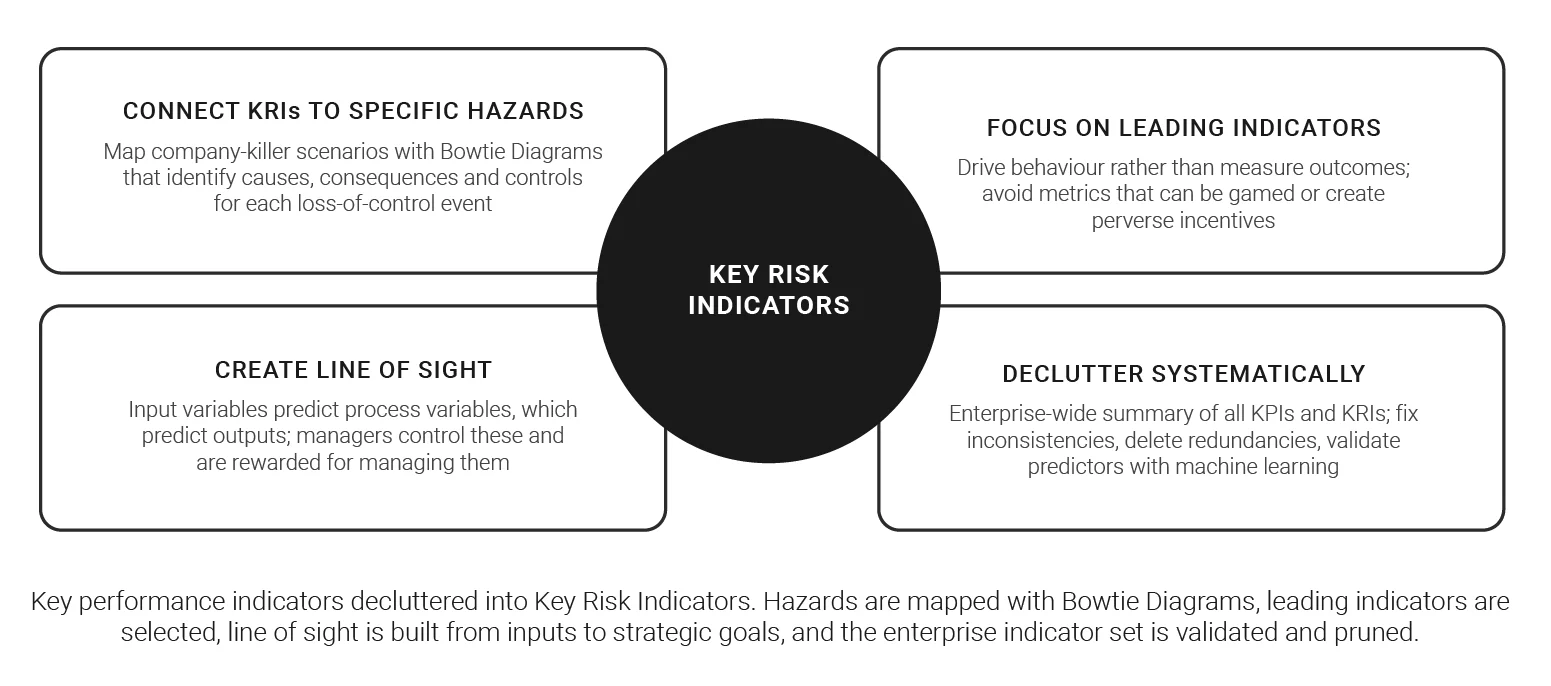
For companies whose systems and programs don’t talk to each other, i.e., EHS, process safety, operational risk, asset management and HR brought into one risk-based structure, with leading indicators that roll up from workgroup to corporate KRIs.

De-risk & Demonstrate

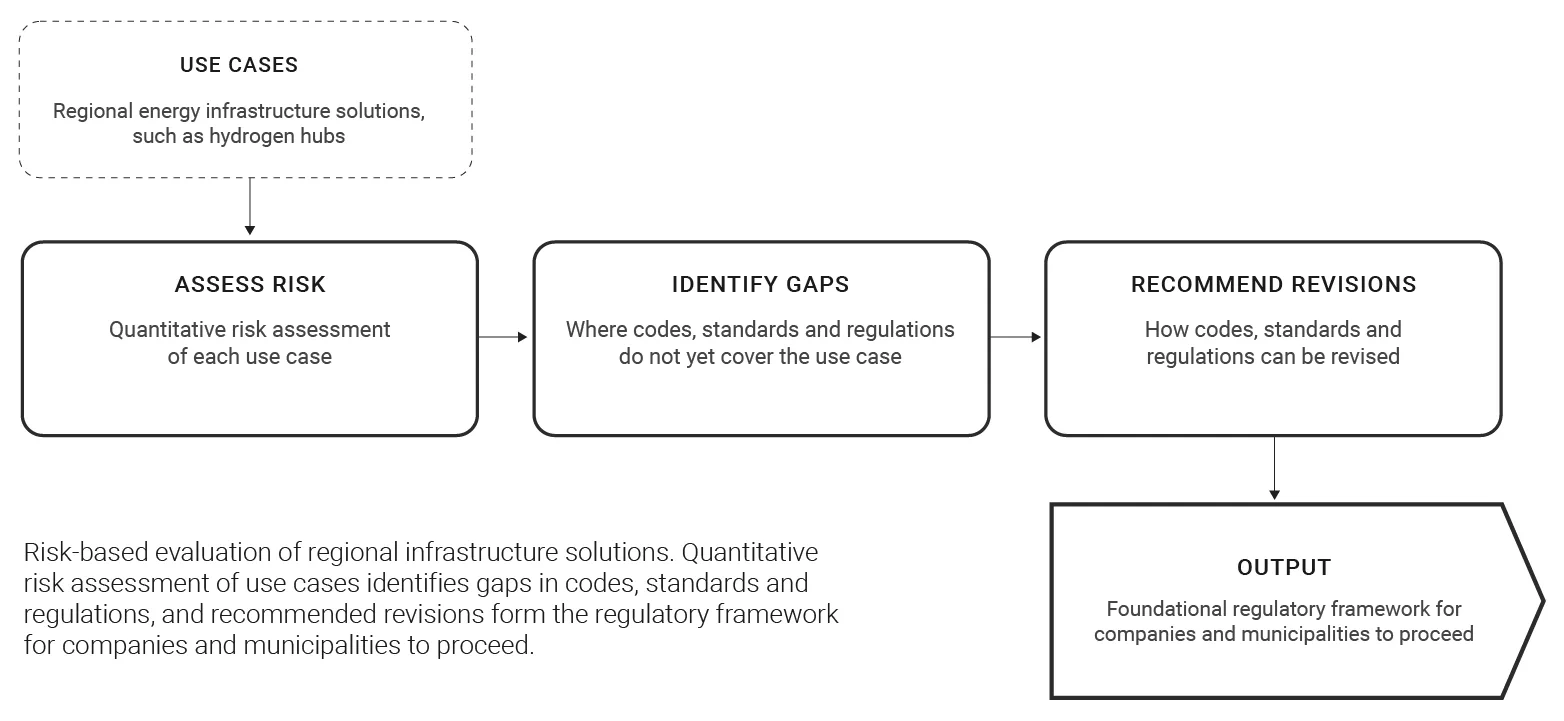
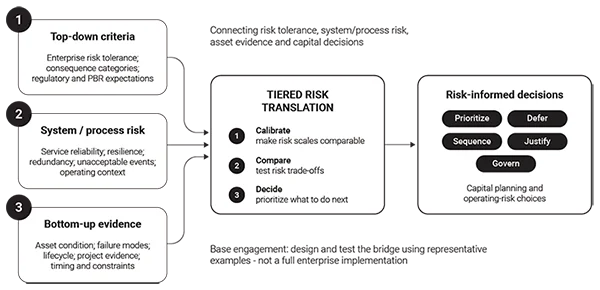
For innovation projects, pilots and large capital projects, i.e., scenario analysis, field testing and quantitative risk assessment, plus evidence packages for regulators, boards and external stakeholders.

Want the evidence first?

Sixteen free think pieces, case studies and one-page guides. Three good places to start: